Color Adventure: Draw the Path
- 4.5
- Rating
- 100.00M
- Installs
- Free
- Price

 Analysis by App-foxy
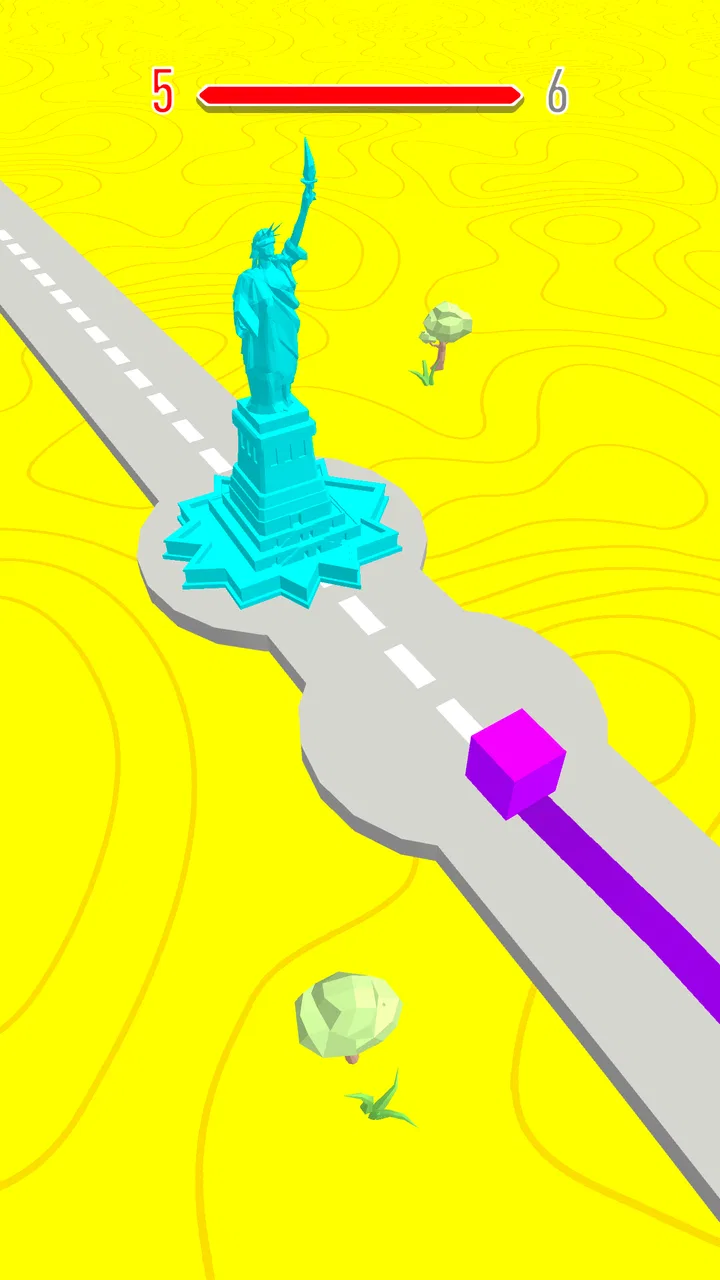
I spent time with Color Adventure: Draw the Path as a quick, touch-focused arcade game, and my first impression was clear: it is built for short, low-pressure sessions rather than deep strategy or a long story. You guide a colored cube by drawing lines along its route, then watch the path turn your simple movement into a small visual puzzle. The appeal is immediate because the central action is easy to understand, but the experience depends heavily on whether you enjoy repeating compact challenges and making careful taps.
That simplicity is also the reason this game has reached a very broad audience. It is free to download, suitable for Everyone, and comes from CASUAL AZUR GAMES. The store rating sits at an average of 4.6 from around 162 thousand ratings, while the game has passed 100 million installs. Those figures suggest that the basic idea works for many people, but they do not automatically make it the right arcade choice for every player. My view is that it is best approached as a relaxing time-filler with light hand-eye demands, not as a substitute for a full puzzle game.
How the current version feels in everyday play
The main loop is deliberately compact. I tap to draw a colored line, guide the cube through the route, and concentrate on keeping the movement aligned with the intended course. There is no need to learn a complicated control scheme before playing. That makes it easy to pick up when I have only a few minutes, such as while waiting for an appointment or taking a short break between tasks.
You May Also Like

 Pandora - Music & Podcasts
Pandora’s Music Is Easy to Start, but Harder to Recover
Pandora’s strength is its low-effort path from a seed to a station. Its weak spot is how much confidence it asks you to place in connection, setup, and quiet recovery.

 8 Ball Pool
 Is Built on Rivalries, Rematches, and Routine
A close look at the rivalries, rematches, shared routines, and unanswered safety questions that turn a quick pool match into a persistent mobile community.

 Samsung Music
’s Quiet Strength Is Playing What You Already Own
Its reach comes less from spectacle than from dependable access to a personal library. That simplicity is both the app’s strongest retention engine and its ceiling.

 AccuWeather: Weather Radar
AccuWeather Review: A Quick, Clear Forecast for Everyday Decisions
For everyday plans, the best forecast is the one you can understand quickly. AccuWeather makes rain timing, radar, and local conditions easy to act on, with a few trade-offs.

 Hill Climb Racing
Why Hill Climb Racing Still Turns Crashes Into One More Run
A tiny car, a bumpy hill and one more upgrade: Hill Climb Racing keeps resurfacing because its simple chaos makes every near-miss feel personal.

 AliExpress - Shopping App
AliExpress Makes Global Shopping Feel Personal, but Shoppers Bear the Risk
AliExpress turns a global marketplace into a pocket-sized discovery engine. Its reach is useful, its shopping loop compelling, and its trade-offs easy to miss.
More From Our News Desk
View All News


What makes the interaction more interesting than a simple swipe game is the relationship between color and movement. The line is not just decoration; it is the thing I create to shape the cube’s journey. That gives each attempt a small planning element. I found myself looking slightly ahead instead of tapping randomly, especially when I wanted a cleaner route. The game rewards attention without demanding the kind of long concentration associated with traditional arcade campaigns.
The visual concept does much of the work. A colored cube moving through a path is easy to read, and the drawing action gives the game a satisfying before-and-after rhythm: first I decide where the line should go, then I see whether the cube follows it successfully. This makes the game approachable for younger players and equally useful for adults who want something uncomplicated.
Still, “relaxing” does not mean completely passive. A careless tap can make a route feel awkward, and the small scale of the action means precision matters. Players who enjoy fast reactions, complex enemy patterns, or elaborate level design may find the core loop too modest. The game’s strength is that it avoids pressure; its weakness is that it may not create enough variety for someone looking for a demanding arcade challenge.
A practical game for short breaks
One realistic way to use it is as a reset between more demanding activities. If I have a few minutes after answering messages, I can open the game, play without preparing a long session, and stop when I am ready. The simple controls also make it more comfortable than games that require several buttons or constant rapid swipes. On a phone, that matters because the experience stays readable even when I am holding the device casually.
I would not choose it for a social gathering where everyone expects multiplayer interaction, nor would I recommend it to someone who wants a strong narrative or character progression. It is a solitary arcade diversion centered on the path-drawing mechanic. That focus is honest and useful, but it also places a firm limit on what the game can offer.
What the version information tells me about its evolution
The game was released on August 28, 2019, and the current version is 1.29.0. That combination tells me this is not a brand-new experiment still finding its identity. It has had time to establish its central format, and the current release number indicates an established product rather than an untouched launch build. I would therefore approach it as a mature casual game: install it for the accessible loop that exists now, not because I expect a completely different genre experience.
Version history by itself does not explain every individual change, so I avoid treating the number as proof of a particular feature. What it does provide is useful context for existing players. Someone returning after a long break should expect the recognizable colored-cube and line-drawing foundation to remain the important part of the experience. The game’s evolution appears to have preserved its central identity instead of replacing it with a more complicated system.
That stability can be a positive. Casual games often become less inviting when updates pile on layers that interrupt the original rhythm. Here, the basic action remains easy to understand, which helps new players start immediately and lets returning players remember what to do without a tutorial-heavy restart. The trade-off is that players hoping for a major reinvention may see the current build as familiar rather than surprising.
How the current build affects returning players
For an existing player, the most important benefit is continuity. If the reason you liked the game was the calm act of drawing a route for the cube, the current version should still make sense without forcing you to relearn an entirely new control philosophy. That is particularly valuable in a game intended for brief visits: the less time spent navigating complexity, the more time goes into the actual path.
New users also benefit from that clarity. The store short description calls it “Color Adventure,” but the hands-on idea is more specific: I am not simply moving a character through a conventional platforming course. I am shaping the route with taps and then judging the result. That distinction is important when deciding whether to install it. If drawing a path sounds satisfying, the game has a clear reason to earn space on your phone. If you prefer direct steering, it may feel indirect.
The free entry point makes trying it straightforward, although the game includes in-app purchases priced at $2.99 per item. I would treat those purchases as optional spending decisions rather than part of the reason to begin. A sensible approach is to play first and decide whether the repeated route-drawing loop genuinely holds your attention. Since the core attraction is mechanical rather than story-based, a purchase will not change whether you enjoy that basic interaction.
Parents may also appreciate the Everyone content rating, especially when looking for a simple arcade game that is easy to explain. I would still recommend that adults make their own judgment about in-app purchases before handing over a device, because an age rating describes content suitability rather than a family’s preferred spending rules. The game’s accessible presentation is a strength, but supervision around purchases remains a practical consideration.
Small techniques that make the drawing mechanic better
My first useful tip is to slow down mentally before tapping. The game looks simple enough to invite instant reactions, but a quick glance at the route can prevent an unnecessary correction. I get better results when I treat the line as a planned instruction instead of a scribble. This is a small distinction, yet it changes the experience from random tapping into light spatial problem-solving.
A second tip is to value clean, short movements over dramatic gestures. On a phone screen, a compact line is easier to control and easier to read than an oversized swipe that crosses more of the display than necessary. This is especially useful when playing one-handed. Keeping the action near the area I can comfortably reach reduces accidental input and makes the game feel calmer.
A third insight is that the game works well as a focus test. I can use a short session to see whether I am actually ready to return to a demanding task. If I keep tapping without considering the route, that usually means I am distracted or rushing. If I can make deliberate lines, the game becomes a gentle transition activity rather than just empty screen time. That is not a formal feature, but it is a practical way to get more value from such a minimal design.
There is also a useful trade-off between relaxation and repetition. The same straightforward mechanic that makes the game comfortable during a break can become predictable if I play for too long. I would therefore avoid judging it after an extended marathon. Its natural format is several short visits, where the tactile action remains pleasant, rather than one long session in which the lack of broader systems becomes more obvious.
Where it compares well with other arcade choices
Compared with reflex-heavy arcade games, this one is more deliberate. I am not mainly trying to survive a storm of enemies or memorize a long chain of button presses. The challenge comes from placing a route for the cube, so it suits players who want a gentler pace and a clearer visual task. That makes it a good alternative when conventional arcade games feel too noisy or demanding.
Compared with traditional puzzle games, however, it is lighter. A dedicated puzzle title may offer layered rules, complex solutions, or a stronger sense of progression. Color Adventure: Draw the Path keeps the focus on the immediate act of drawing and guiding. I prefer it when I want an uncomplicated mental warm-up, but I would choose a deeper puzzle game for a long evening of problem-solving.
It also differs from ordinary drawing apps. The line is not an open-ended creative project; it serves the cube’s movement. Players expecting a sketchbook, freeform art tools, or a way to save personal drawings will be looking for a different kind of experience. The drawing is functional, and that limitation is exactly what keeps the controls approachable.
Limitations worth considering before installing
The biggest limitation is narrowness. The game has one clearly defined idea, and its success depends on how much pleasure I get from repeating that idea. There is no reason to install it if I already know that short arcade loops lose their charm quickly. A richer alternative would be better for players who need story, collection systems, competitive depth, or a wide range of mechanics to stay engaged.
The indirect control may also divide players. Some people enjoy preparing a route and watching the cube follow it; others prefer immediate control over every movement. If you become frustrated when an avatar does not respond exactly as you expect from direct steering, the drawing system may feel like an extra layer rather than a satisfying one.
Another consideration is the balance between free access and optional purchases. The game is free, which lowers the risk of trying it, but the presence of $2.99 items means I would check any purchase prompt carefully. I would not buy anything simply because I wanted to remove the feeling of repetition. First I would decide whether the underlying mechanic is still enjoyable on its own.
Device compatibility is also worth checking before downloading. The minimum operating system is Android 7.1, so users on older Android versions may need to confirm that their device can run it. For supported phones, the game’s uncomplicated presentation should be less intimidating than a demanding three-dimensional action title, but the exact comfort of the controls will still depend on screen size and how naturally you can tap.
Who should play it and who should skip it
I recommend it to casual arcade fans who want a colorful touch game with a clear objective and little setup. It is particularly suitable for short breaks, younger players who enjoy simple visual feedback, and adults who like light concentration without a heavy commitment. The free price makes it easy to test, while the Everyone rating broadens its appeal for households choosing accessible games.
I would skip it if your priority is competitive multiplayer, an unfolding story, deep character development, or a large strategic system. I would also skip it if you want every session to feel substantially different. The game’s identity is its focused route-drawing loop, and that focus is not likely to satisfy someone searching for a broad arcade collection inside one app.
For returning users, the current version offers a familiar place to revisit the mechanic rather than a reason to expect a completely new game. For new users, the best test is simple: play long enough to decide whether planning a line for the cube feels calming or merely repetitive. That answer will tell you more than the install count or rating ever could.
My recommendation after using it
Color Adventure: Draw the Path is a focused arcade game with a pleasant central idea. I like that it turns a basic tap into a small act of planning, and I appreciate how quickly I can start a session without learning a complicated control scheme. The colored cube gives the interaction a clear visual target, while the line-drawing mechanic adds just enough involvement to keep the game from feeling like a completely passive animation.
Its limits are equally clear. The experience is not designed to replace a deep puzzle game or a feature-rich arcade adventure, and repetition can become noticeable during long sessions. The optional $2.99 purchases also deserve a deliberate decision rather than an automatic tap. My recommendation is to treat it as a compact break-time game: install it if you enjoy simple route planning, play in short bursts, and move on to something more substantial when you need variety.
Overall, the established current release, broad audience, and accessible controls make it an easy game to try. Its real strength is the calm, tactile connection between drawing a line and seeing the cube follow it. That is enough to make it worthwhile for the right player, but not enough to satisfy everyone. I would recommend it to a friend who wants a gentle arcade distraction, while being honest that players seeking depth, competition, or constant novelty should choose a different option.
FAQs for Color Adventure: Draw the Path
01What is Color Adventure: Draw the Path?
Color Adventure: Draw the Path is a unique mobile puzzle game where players guide a sphere through various levels by drawing paths. The game challenges your creativity and planning skills as you navigate through colorful landscapes, aiming to complete each level by painting the path without crossing over previous lines.
02Is Color Adventure: Draw the Path free to play?
Yes, Color Adventure: Draw the Path is free to download and play on both Android and iOS devices. However, it does offer in-app purchases that can enhance gameplay, such as additional lives or ad-free experiences. Players can enjoy the core game without spending money, but purchases can provide a more seamless experience.
03What are the gameplay features of Color Adventure: Draw the Path?
The game features a simple yet addictive gameplay mechanic where you draw paths to guide a ball through vibrant levels. It includes various challenges, obstacles, and power-ups. With increasing difficulty, players must strategize to complete each level without retracing their steps, making it both engaging and challenging.
04Are there any age restrictions for playing Color Adventure: Draw the Path?
Color Adventure: Draw the Path is generally suitable for all ages. Its intuitive gameplay and colorful graphics make it appealing to both children and adults. However, parents should be mindful of in-app purchases and ads. The game’s simplicity makes it accessible, but its strategic elements provide depth for older players.
05What are the system requirements for Color Adventure: Draw the Path?
For Android, the game requires version 5.0 or higher, while iOS users need iOS 9.0 or later. It’s optimized for smooth performance on most devices, but ensuring your device’s software is up to date will provide the best experience. The game is lightweight, so it shouldn't heavily affect your storage.
Pros
- Unique
- engaging gameplay with creative path drawing.
- Vibrant and colorful graphics enhance user experience.
- Levels offer increasing challenges
- keeping it fresh.
- Simple controls make it accessible to all ages.
- Offline play available
- perfect for travel or commutes.
Cons
- Repetitive levels may lack long-term engagement.
- In-app purchases can be pricey for full features.
- Ads can be intrusive without a purchase.
- Limited customization options for players.
- Occasional glitches interrupt gameplay flow.

Color Adventure: Draw the Path
Gallery